The more vocabulary you actively know, the better you communicate.
It is that simple.
Words are the building blocks of any language. They form every sentence and thought.
You could communicate without grammar, but you can't without words.
The problem, though, is that no one taught us how to learn and retain them effectively.
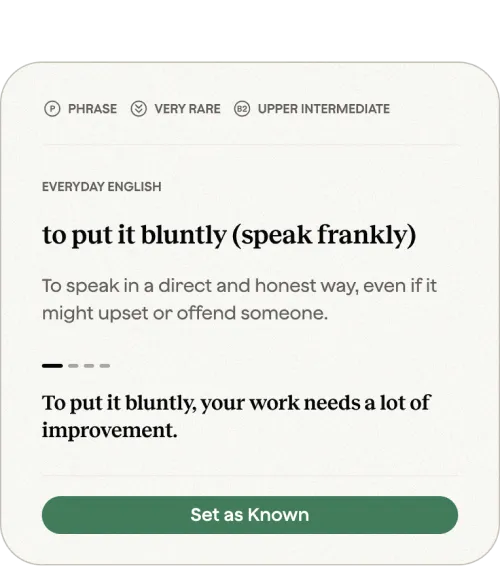
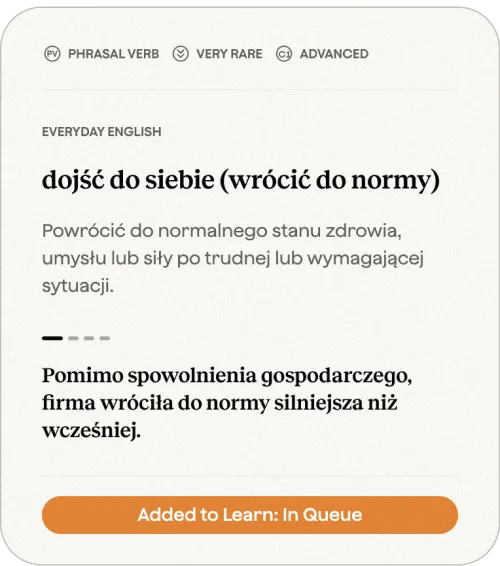
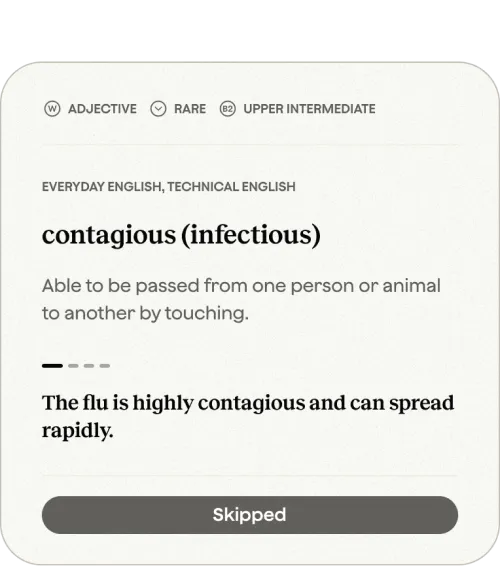
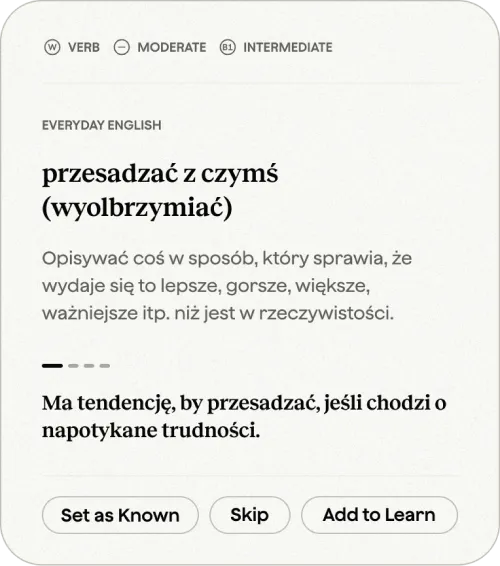
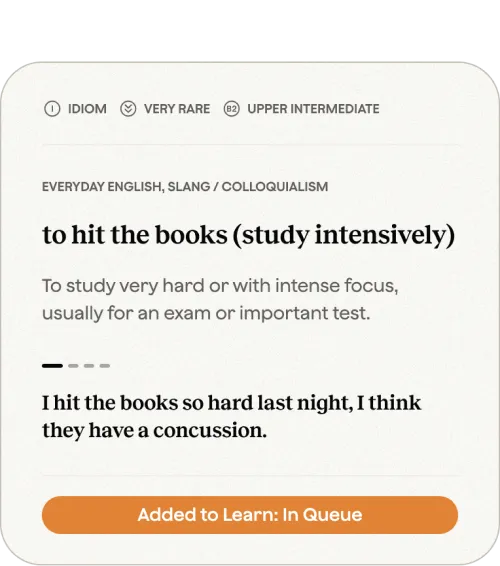
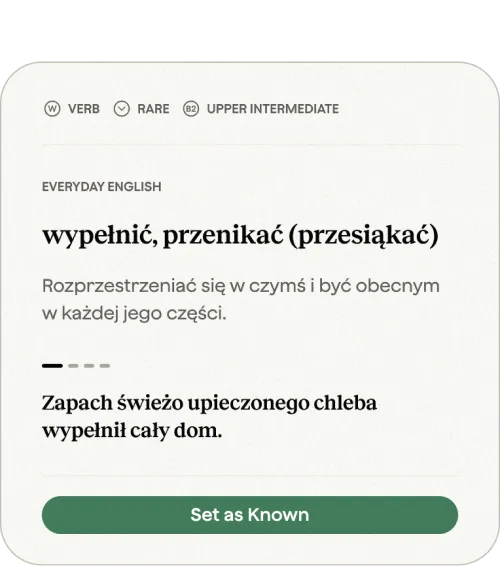
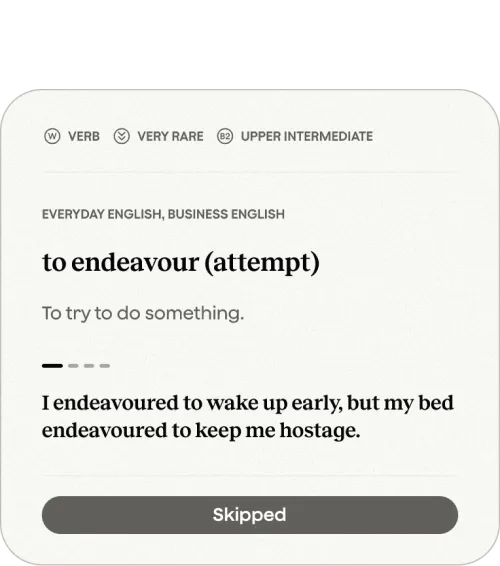
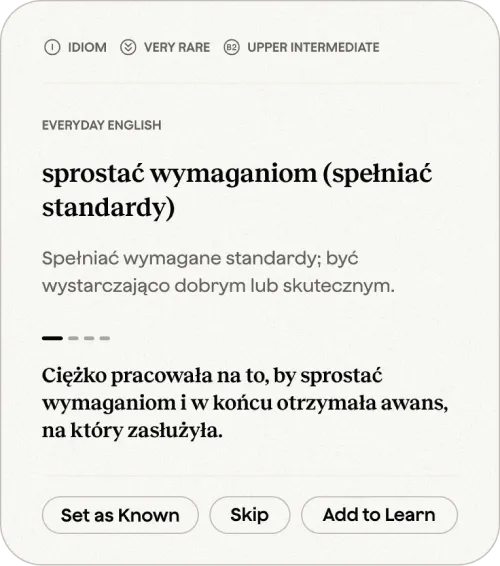
Our mission is to guide intermediate+ language learners through the complexities of effective learning techniques, making them want to learn more.
We believe that nearly everyone can master the language.
Those who struggle may not be using the right methods.
PROBLEM
Most language learners still rely on outdated, time-consuming, and ineffective traditional methods.
They progress slowly because they:
don't interact with the learning material properly, which leads to quick forgetting;
try to learn too much at once, which makes them feel overwhelmed;
learn in a way that makes it difficult to apply their knowledge in real-life situations;
stop learning too soon, thinking they've mastered the material when they haven't;
don't learn in a systematic way, making remembering seem incredibly slow.
Solution
You need a system that maximizes your learning results but minimizes your learning burden.
The system that will help you progress fast by:
handling all the complex methodologies for you, allowing you to focus solely on learning;
preventing you from learning too much at once, thus keeping you fresh and motivated;
helping you thoroughly process the material, ensuring you remember it permanently;
offering high-quality content, so you learn only the most relevant information;
ensuring that learning sessions are well-spaced throughout the day, preventing surface learning.
Meet Memorized.
A complete strategy for expanding your active vocabulary.
The app designed for intermediate+ language learners to help them expand their active vocabulary with scientifically proven micro-learning sessions, enabling them to express themselves confidently in any situation.
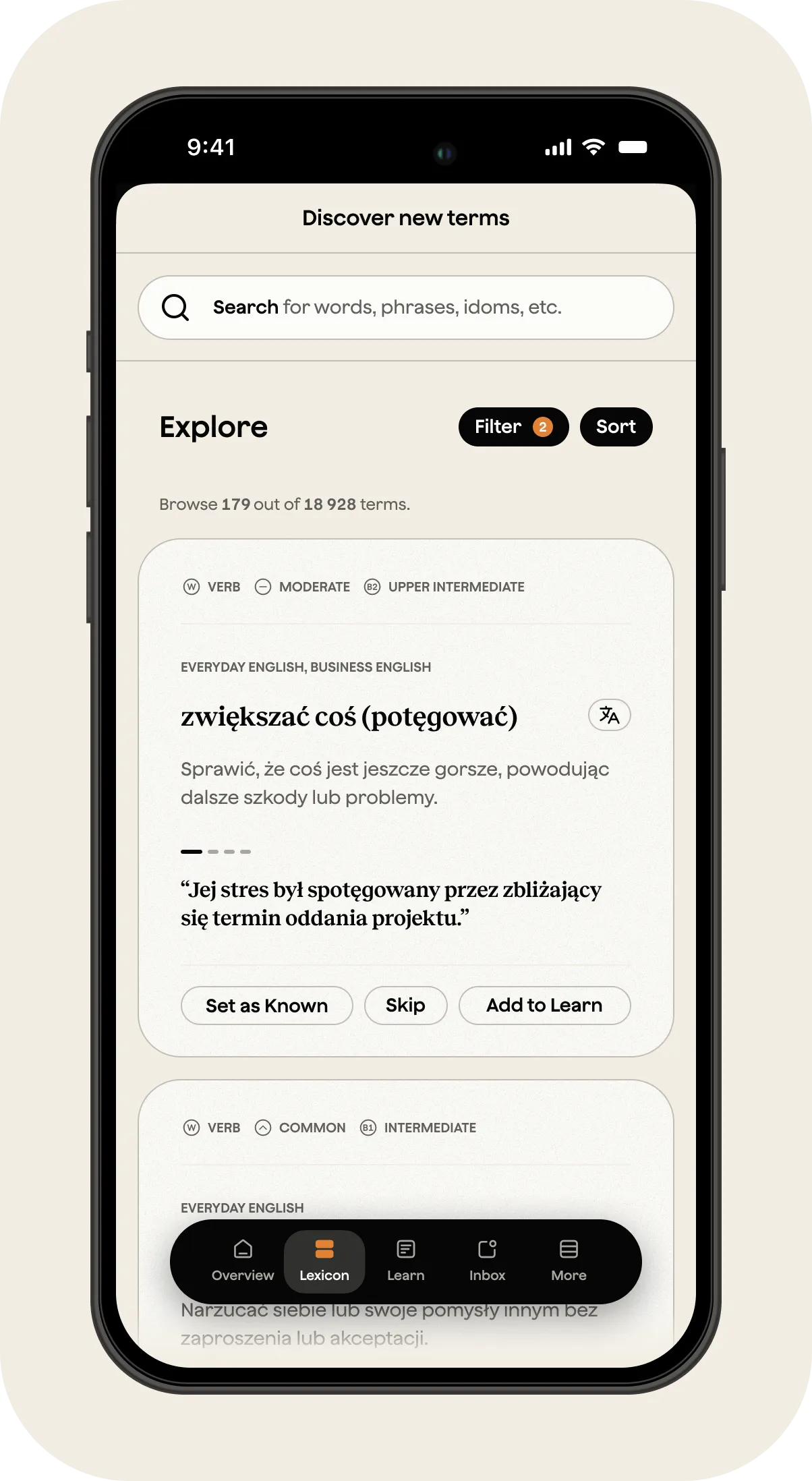
THE LEXICON
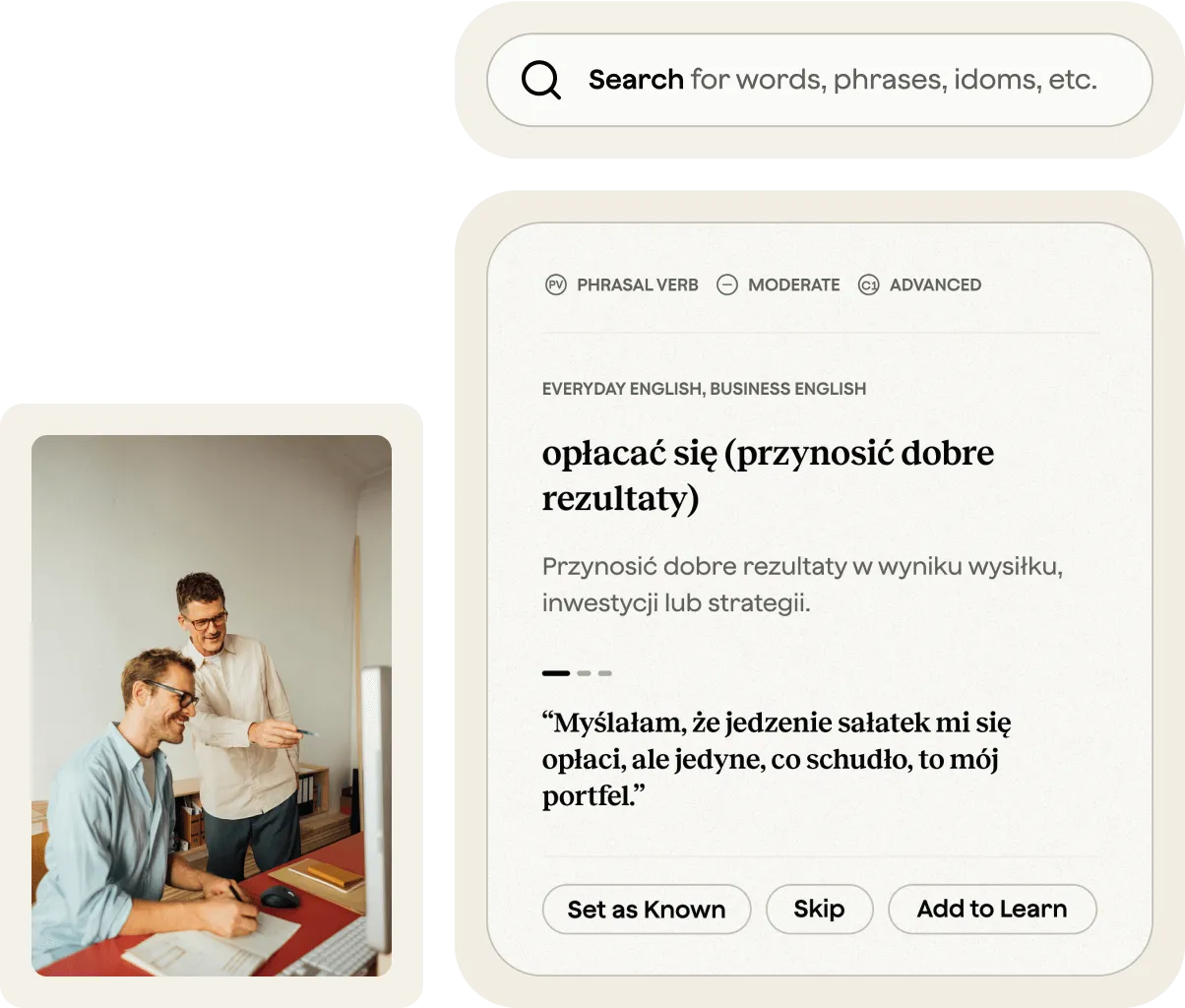
Discover new vocabulary that is truly worth learning.
The Lexicon is an exceptional, handcrafted, and precisely curated vocabulary resource designed specifically for language learning purposes.
SEARCH OR EXPLORE TO DISCOVER NEW VOCABULARY
Freely browse the most commonly used English words and expressions from the web, books, movies, and beyond, allowing you to learn terms that are currently in use and relevant to your skills and interests.
Filter and sort items on the list by selecting their learning relevance, frequency of usage, language level, and more, enabling you to prioritise the vocabulary that will be most useful to you right away.
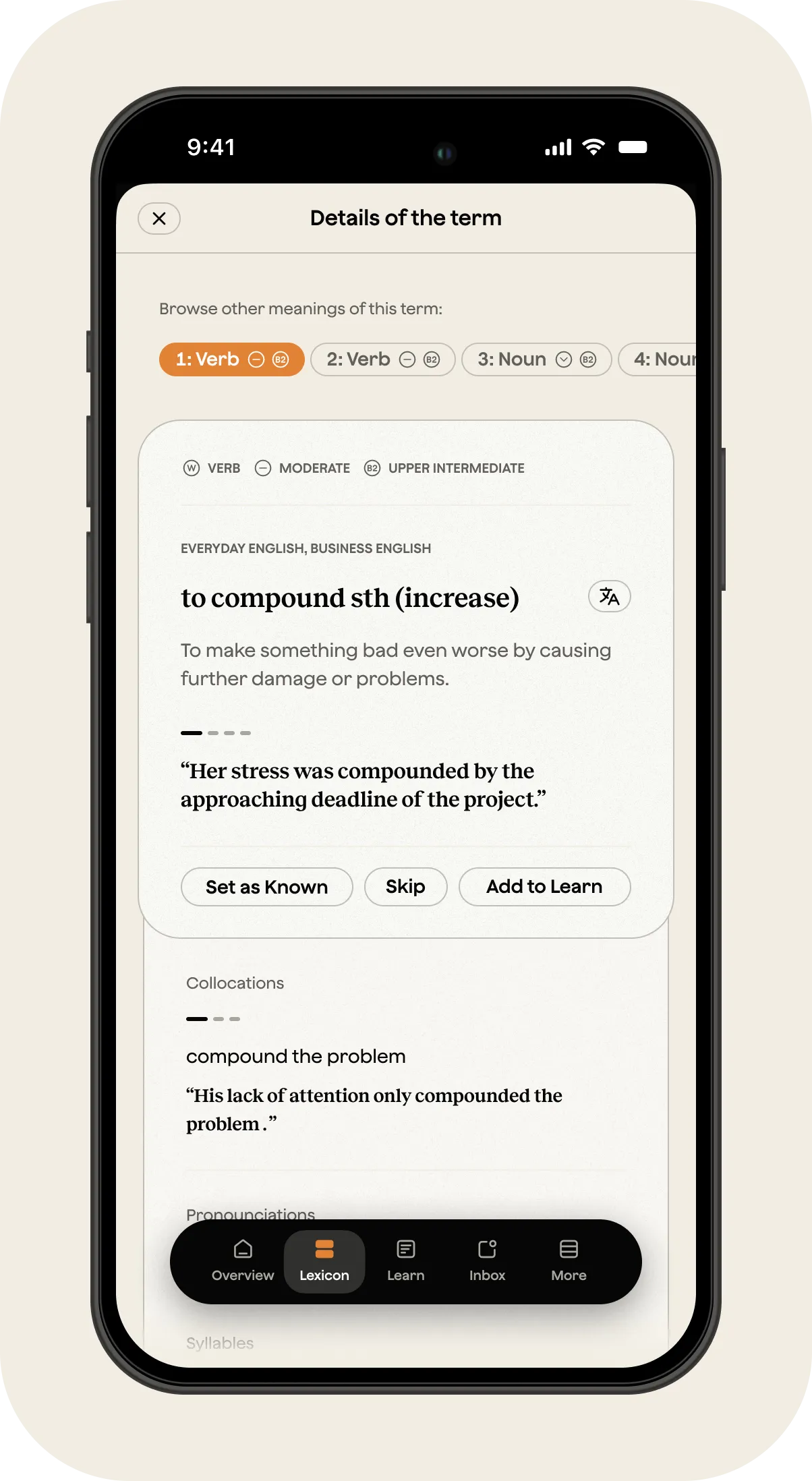
INSTANTLY UNDERSTAND ITS MEANING AND CONTEXT
Instantly grasp the meaning of each term with clear definitions, contextual usage, example sentences, and more. Ensure you can use them accurately and appropriately without confusion.
Examine the various meanings of the term and learn each sense individually to systematically gain a deeper understanding of the language's nuances.
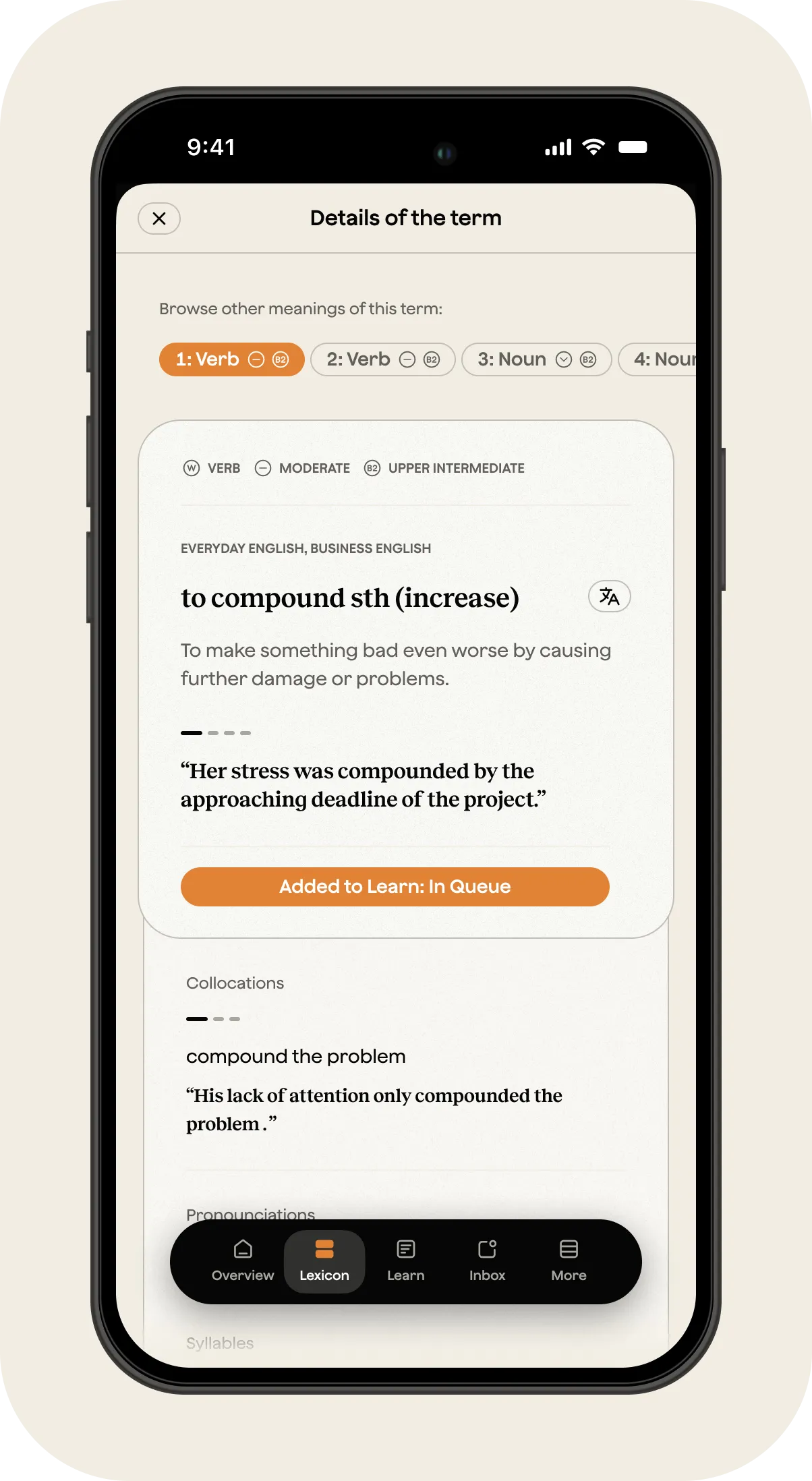
DECIDE WHICH ONES WANT TO START LEARNING
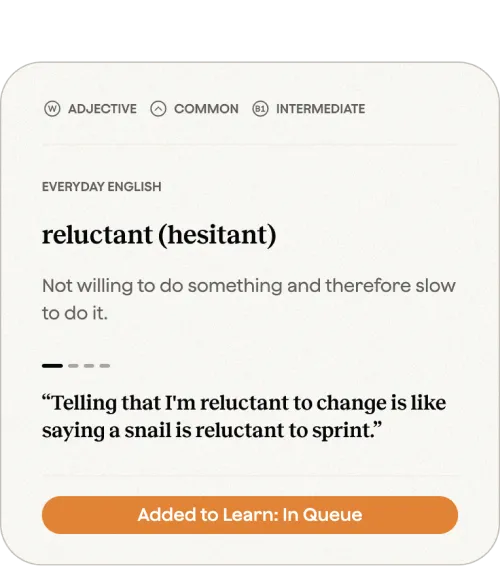
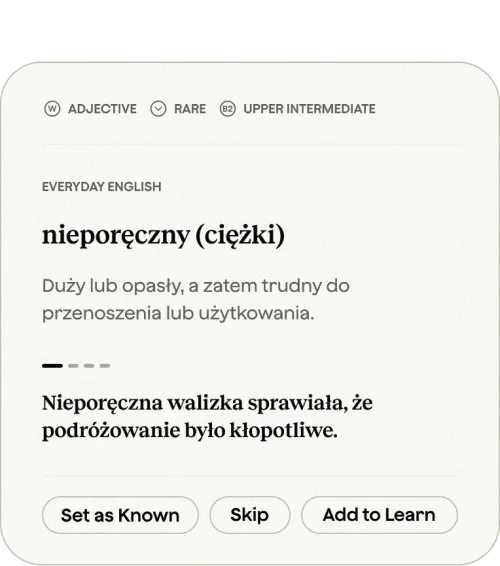
Easily manage your learning list with a single click. Mark terms as known, skip them, or add them to your learning queue, allowing you to focus on the vocabulary that matters most to you.
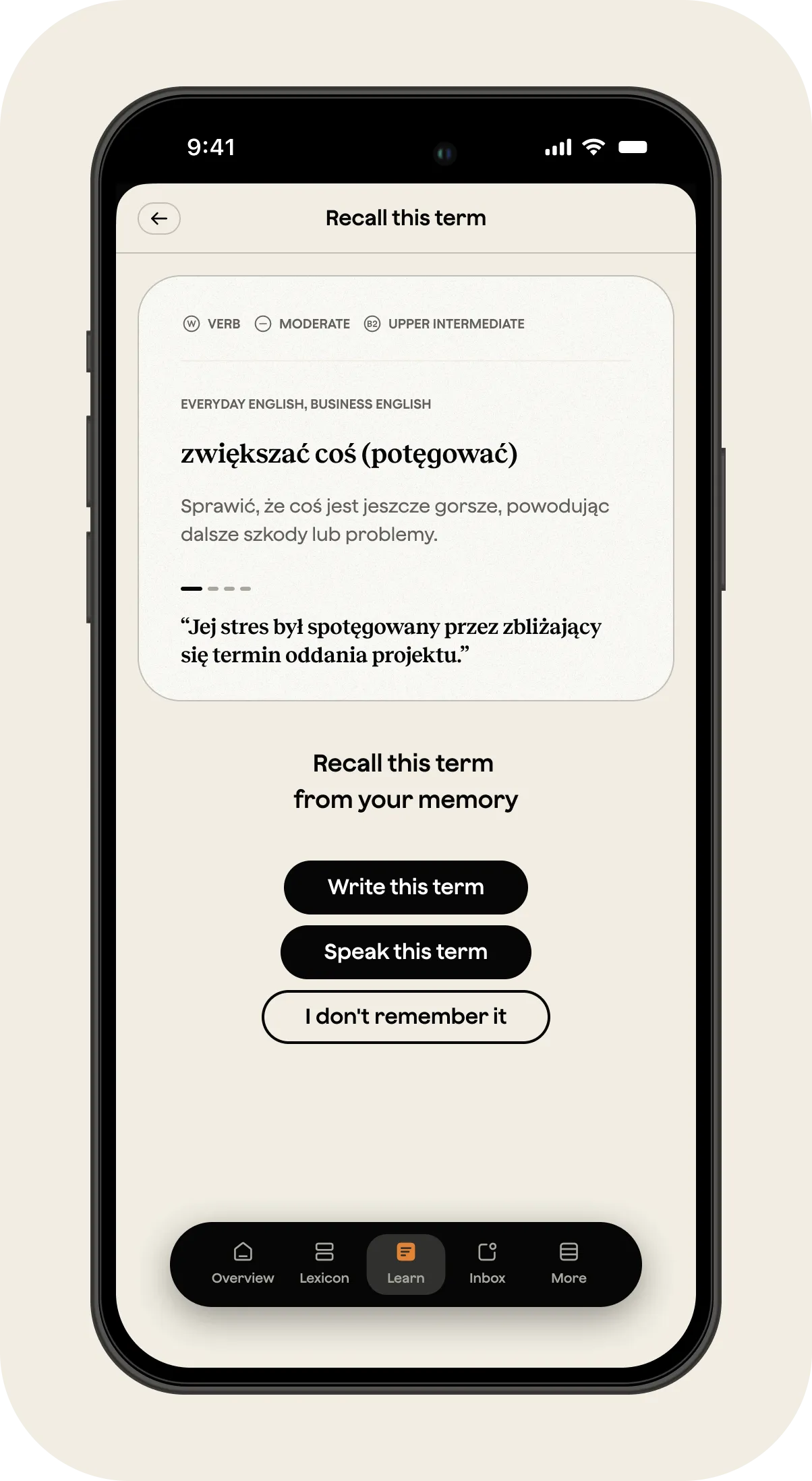
THE MICRO-LEARNING
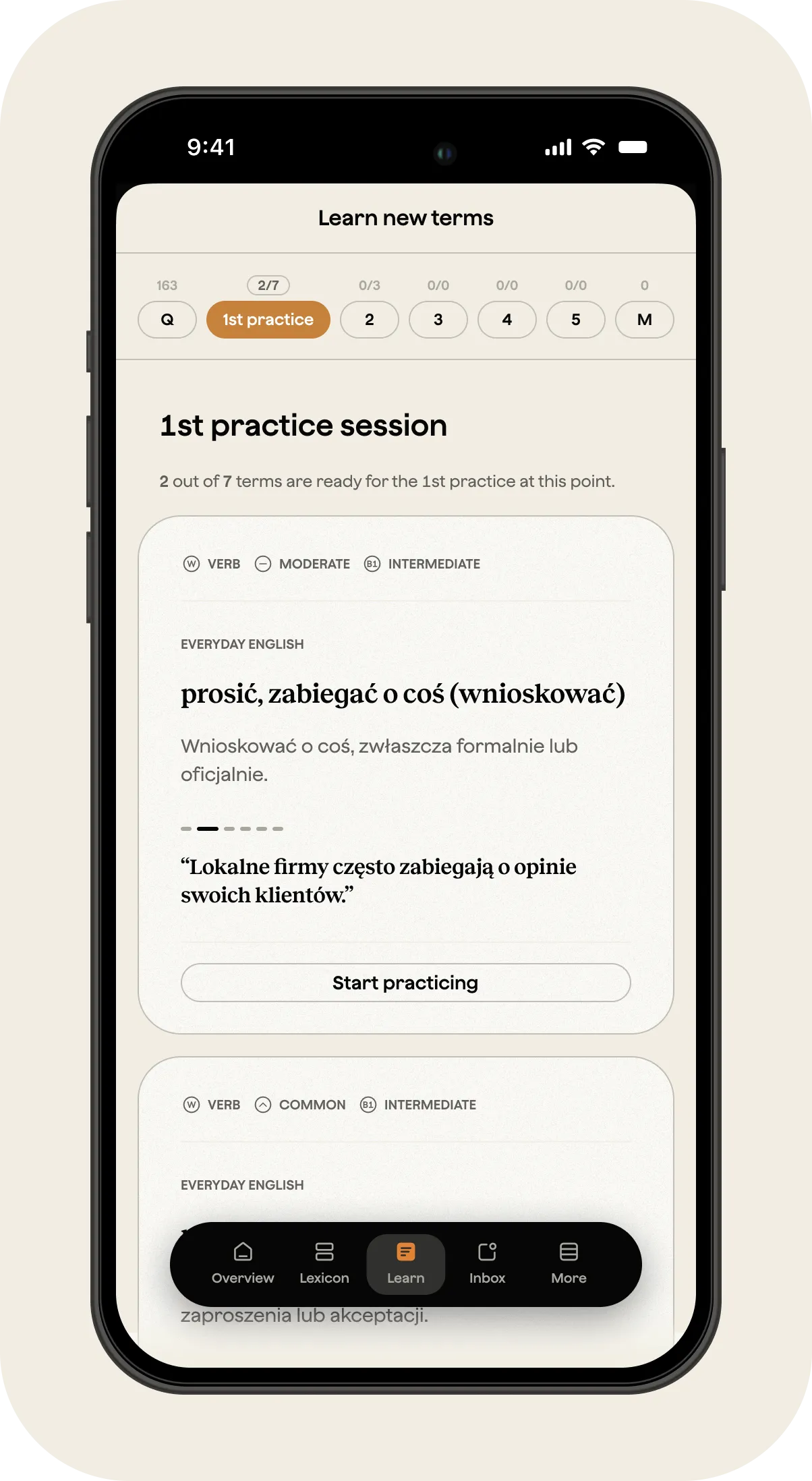
Learn and activate it through micro-learning sessions.
The Micro-learning is a process designed to optimize your learning by incorporating complex scientific methods into manageable, bite-sized lessons.
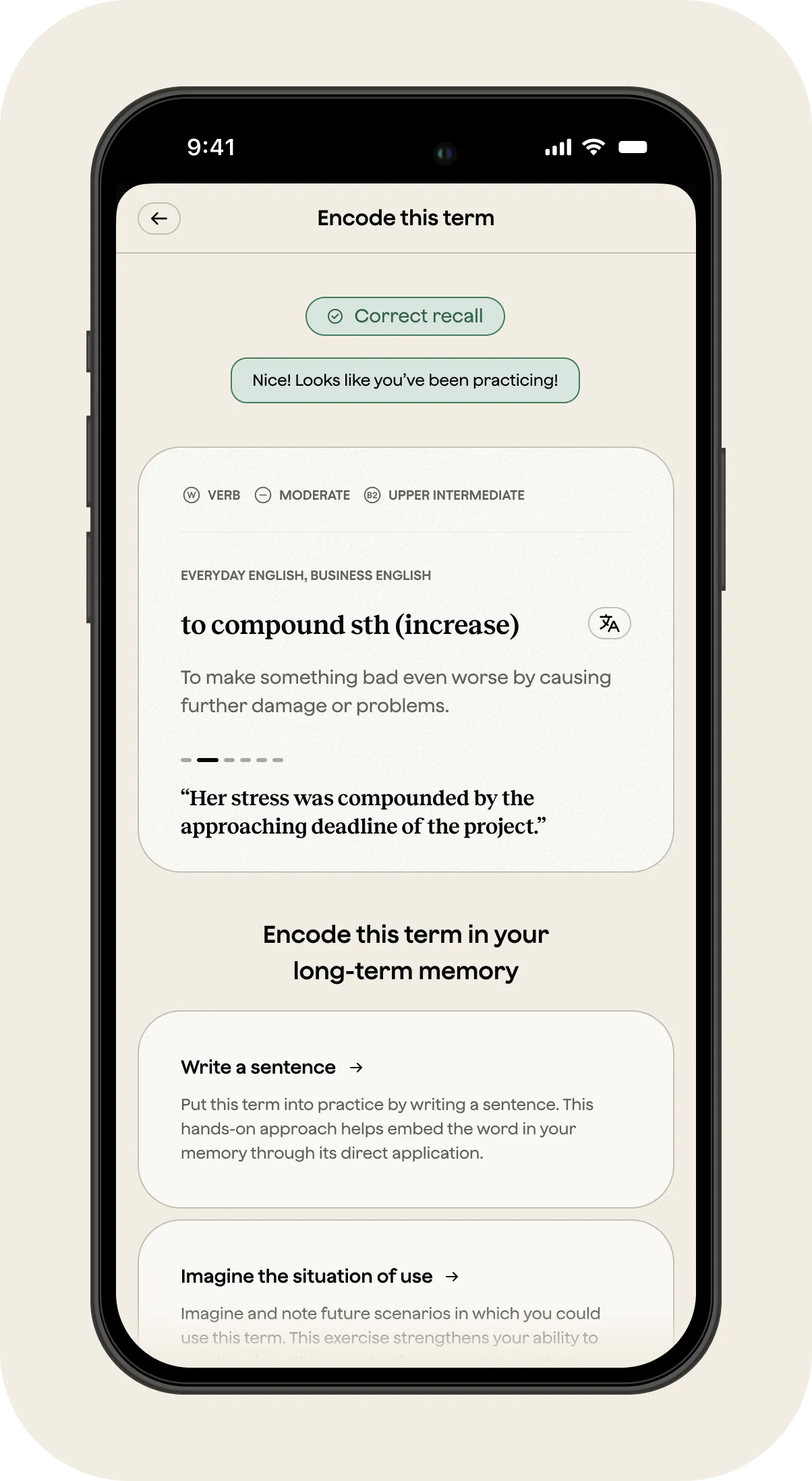
RECALL IT FROM YOUR MEMORY
Make sure you actively remember each learning term during practice to train for instant access whenever needed.
Ensure you remember how to spell or type a practised term correctly, so you avoid making mistakes when using it in real-life situations.
ENCODE IT TO LONG-TERM MEMORY
Transfer this term from short-term to long-term memory by reinforcing neural pathways, so it becomes deeply rooted and readily accessible whenever needed.
Activate a learning term by practising its usage in real-world scenarios, in order that you understand how to apply it in diverse contexts and situations.
MAKE STEADY PROGRESS
Receive intelligent reminders when new review sessions are available, so your learning stays consistent and your brain is prepared for the next micro-learning session.

THE OVERVIEW
Experience daily progress in your communication skills.
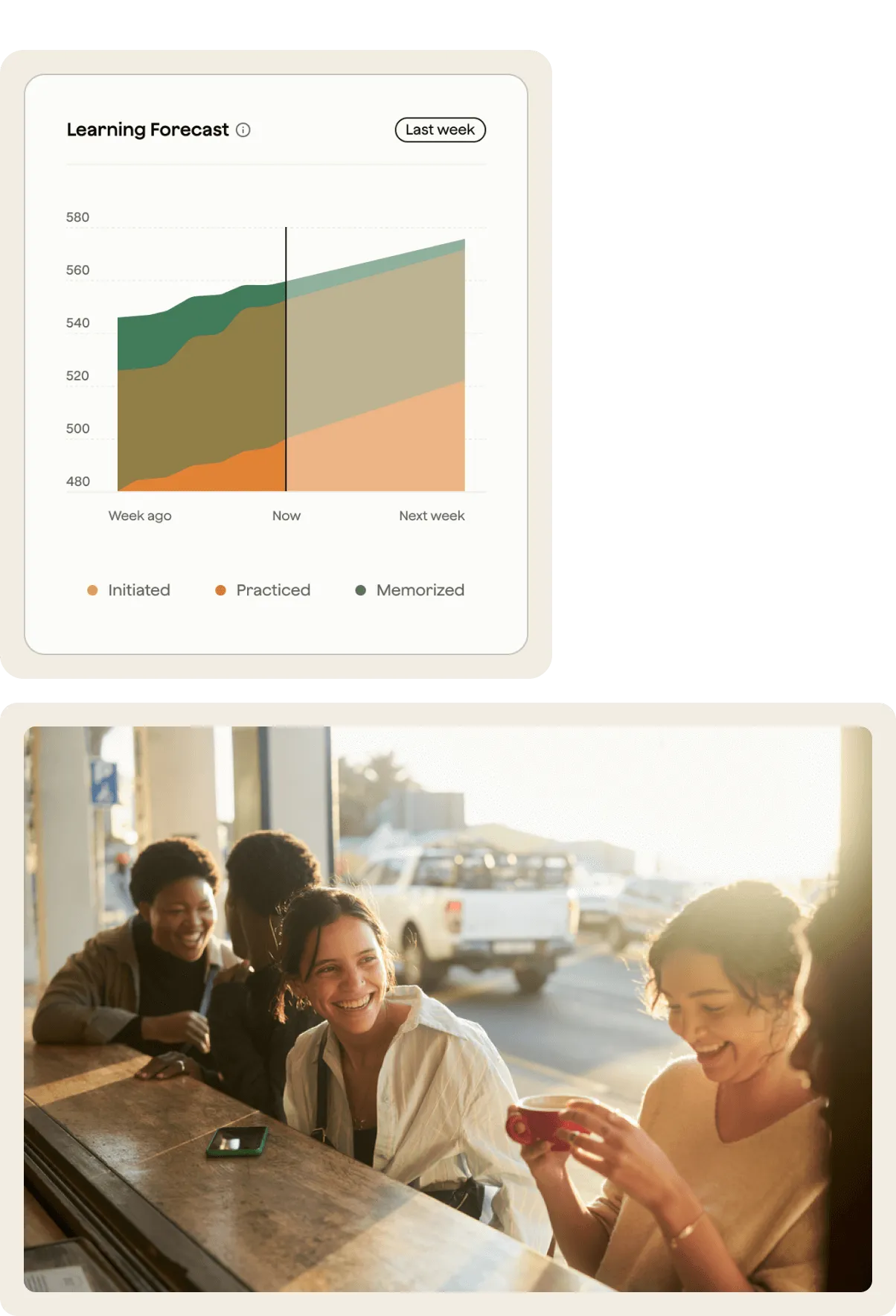
The Overview is a dashboard that displays your learning progress and its effectiveness, offering insights into your achievements and future goals.
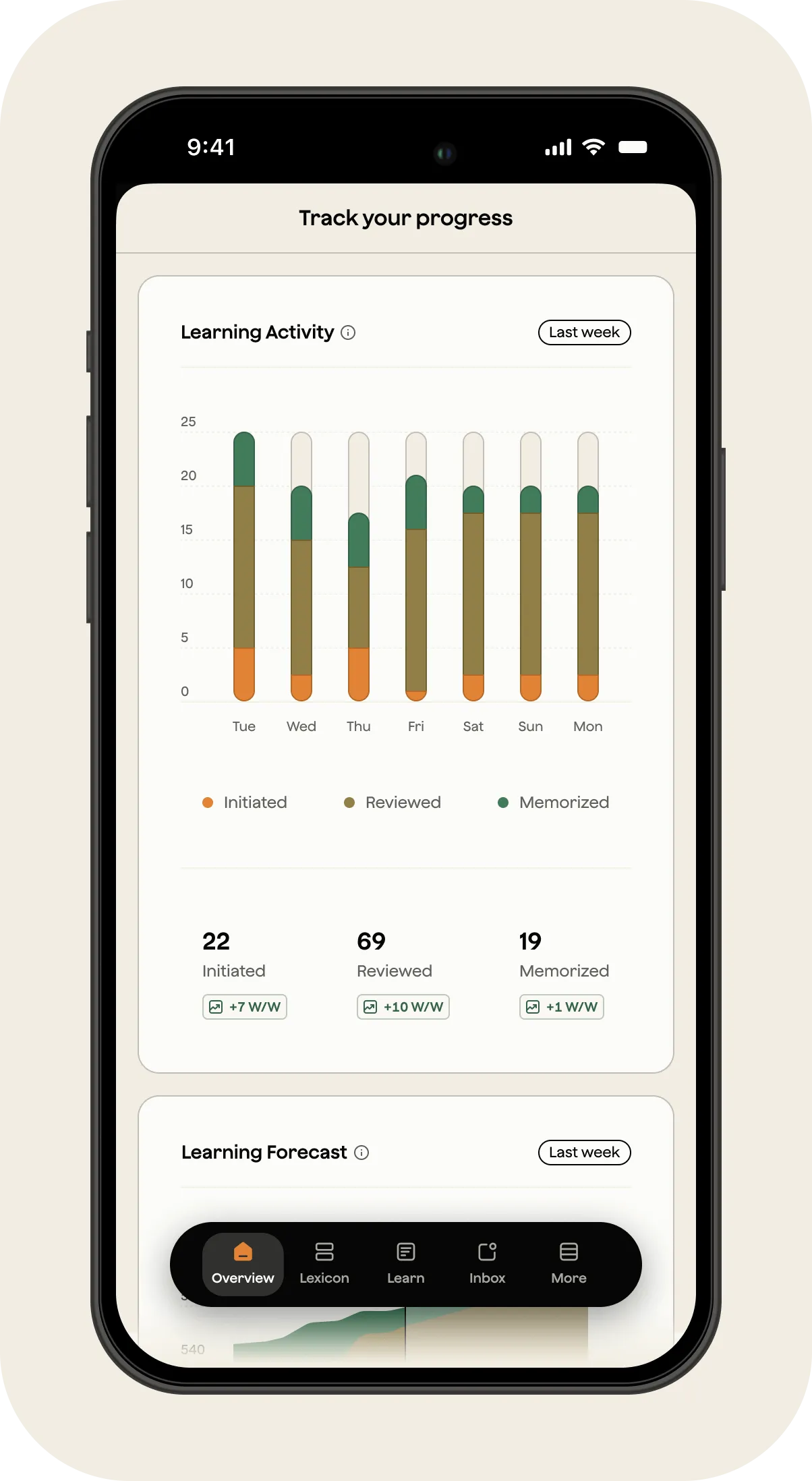
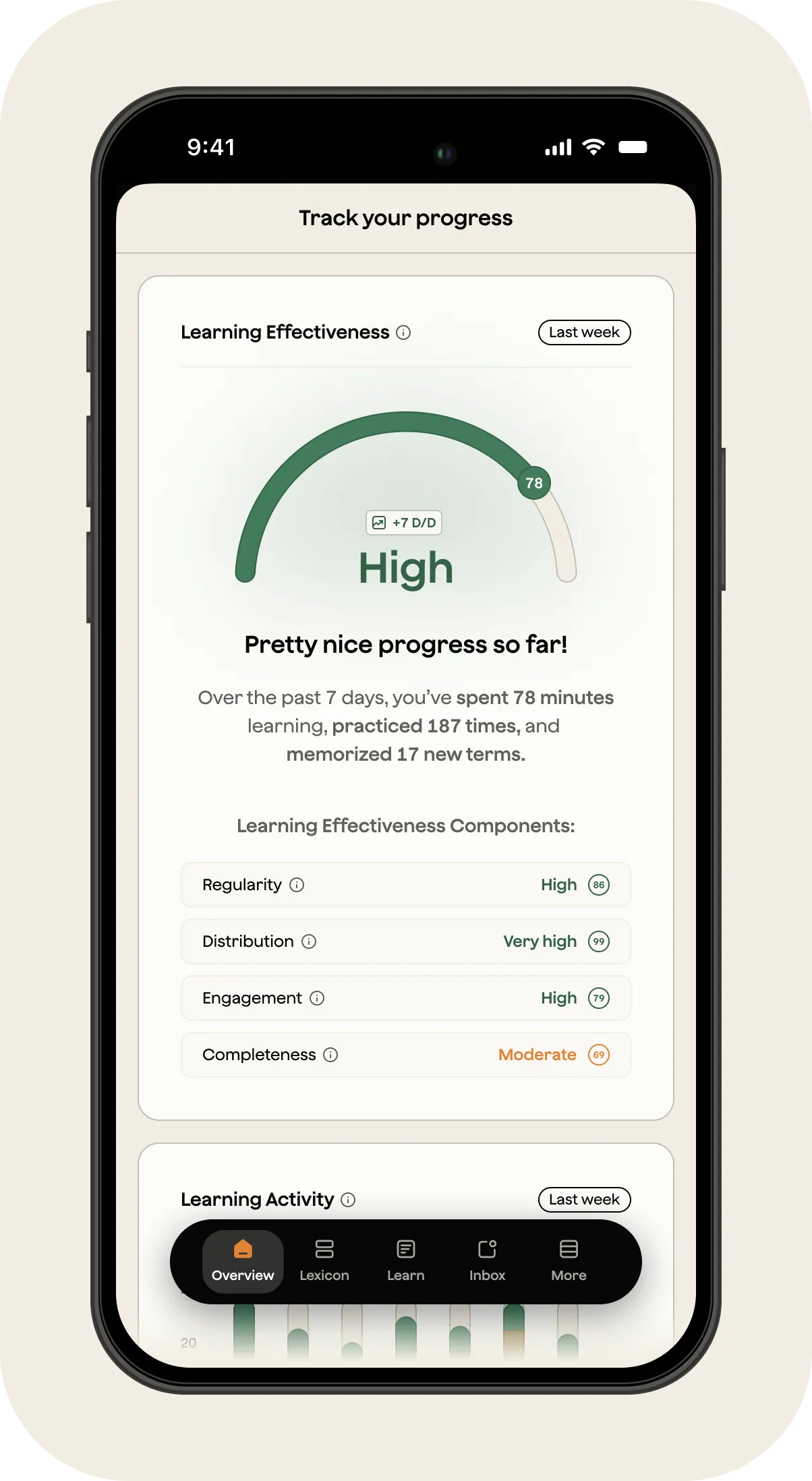
TRACK YOUR PROGRESS
Access comprehensive statistics on your learning effectiveness to gain insights into your progress and identify areas for improvement.
Stay updated with your daily learning activity by monitoring the number of terms learned and retained, along with future forecasts.
IMPROVE LEARNING EFFICIENCY
Read and implement valuable suggestions to make your learning even more effective and impactful.
COMMUNICATE EASILY AND CONFIDENTLY
Initiate and maintain increasingly more conversations using the vocabulary that you have memorized.
Micro-learning, macro-progress.
An evolutionary scientific approach to education integrates several scientifically proven techniques for effective learning into manageable, bite-sized lessons, seamlessly incorporated into your daily routine.
We have consolidated numerous methods and psychological concepts into a simple and remarkably effective micro-learning process.
The Leitner System: Optimizing learning with spaced repetition
WHAT THIS METHOD IS ABOUT
The Leitner System is a method of using spaced repetition to enhance learning and retention. Developed by German science journalist Sebastian Leitner in the 1970s, this technique involves organizing flashcards into different boxes or levels based on how well you know each piece of information. The system ensures that learners review material at increasing intervals, focusing more on difficult items and less on those already mastered.
HOW WE HAVE APPLIED IT TO THE APP
In Memorized, we implement the Leitner System by organizing flashcards into five groups based on how well users know each term. Cards start in the initial group and move to the next group upon successful recall during practice sessions. If a card is not recalled correctly, it stays in the same group for additional review. This system continues until all cards reach the "Memorized" group, ensuring that users focus on learning terms they find most challenging.
WHAT LEARNING BENEFITS DOES IT PROVIDE
Efficient Review: The system focuses study efforts on difficult material, reducing time spent on information that is already well-known.
Enhanced Retention: By using spaced repetition, the Leitner System helps transfer information from short-term to long-term memory.
Active Recall: The use of flashcards promotes active recall, which is more effective for learning than passive review.
Structured Learning: The system provides a clear, organized method for studying, which can help improve study habits and consistency.
Active Encoding: Enhancing learning through engaged processing
WHAT THIS METHOD IS ABOUT
Active encoding is a learning technique that involves actively engaging with new information during the initial learning process. Unlike passive learning, where information is simply received, active encoding requires learners to process, manipulate, and think critically about the material, leading to better understanding and retention.
HOW WE HAVE APPLIED IT TO THE APP
In Memorized, we use active encoding for example by requiring learners to write sentences with new vocabulary. The app provides feedback on these sentences, helping learners understand and correct their mistakes. This method enhances engagement, retention, and the practical application of new words.
WHAT LEARNING BENEFITS DOES IT PROVIDE
Improved Retention: Actively engaging with information strengthens neural connections, making it easier to recall later.
Enhanced Understanding: Processing information actively helps in understanding complex concepts more thoroughly.
Greater Engagement: Active encoding keeps learners engaged and motivated, reducing the likelihood of mind-wandering and passive absorption.
Better Application: Learners can apply information more effectively in different contexts due to a deeper understanding.
Distributed Practice: Spreading out learning sessions over time
WHAT THIS METHOD IS ABOUT
Distributed practice, also known as spaced repetition or spaced practice, is a learning technique where study sessions are spread out over time rather than being crammed into a single session. This approach is based on the principle that learning is more effective when exposure to the material is distributed over a longer period, allowing for intervals of rest and consolidation.
HOW WE HAVE APPLIED IT TO THE APP
In Memorized, we use distributed practice by scheduling flashcard reviews across different sessions based on user performance. Flashcards that are less familiar appear more frequently, while those that are well-known are spaced out over longer intervals. The app sends intelligent reminders to users, prompting them to engage in short, regular study sessions throughout the day, which prevents cognitive overload and promotes effective learning.
WHAT LEARNING BENEFITS DOES IT PROVIDE
Enhanced Retention: By spacing out study sessions, learners are more likely to transfer information from short-term to long-term memory, resulting in better retention.
Improved Understanding: Distributed practice encourages deeper cognitive processing, leading to a better understanding of the material.
Reduced Cognitive Overload: Spreading out learning reduces the risk of cognitive overload, making it easier for learners to absorb and integrate new information.
Sustained Motivation: Regular, shorter study sessions are often more manageable and less daunting than long, intense cramming sessions, helping to maintain motivation and engagement.
Active Recall: Enhancing learning through Retrieval Practice
WHAT THIS METHOD IS ABOUT
Active Recall (also known as Retrieval Practice) is a learning strategy that involves actively recalling information from memory rather than passively reviewing it. This technique is based on the idea that the act of retrieving information strengthens the memory and enhances learning, making it easier to recall in the future.
HOW WE HAVE APPLIED IT TO THE APP
In Memorized, we implement active recall through interactive practice sessions where learners attempt to retrieve vocabulary from memory. During these sessions, users are prompted to recall the meaning or usage of a word, and the app provides immediate feedback on their performance. This active retrieval process strengthens memory and reinforces the learner's ability to recall information accurately in the future.
WHAT LEARNING BENEFITS DOES IT PROVIDE
Strengthened Memory: Each act of recall enhances the neural pathways associated with the memory, making it stronger and more durable.
Improved Understanding: Active Recall not only aids in memorization but also deepens understanding by requiring learners to process and reconstruct information.
Better Long-Term Retention: Regular recall helps transfer information to long-term memory, reducing forgetting over time.
Increased Transfer of Knowledge: By practicing retrieval, learners improve their ability to apply knowledge in different contexts and solve new problems.
Forgetting Curve: Understanding and combatting memory decay
WHAT THIS CONCEPT IS ABOUT
The forgetting curve is a psychological concept that illustrates how information is lost over time when there is no attempt to retain it. This concept was first introduced by Hermann Ebbinghaus in the late 19th century. It shows that memory retention declines exponentially after learning unless active measures are taken to reinforce the information.
HOW WE HAVE APPLIED IT TO THE APP
In Memorized, we address the forgetting curve by spacing review sessions at strategically increasing intervals. The app schedules reviews just before users are likely to forget the information, based on the forgetting curve theory. This approach helps maintain information in long-term memory by ensuring timely reinforcement of learned material.
LEARNING BENEFITS OF APPLYING THIS CONCEPT
Optimized Study Schedules: By understanding how quickly information can be forgotten, the app creates study schedules that optimize retention.
Improved Long-Term Retention: Regular review sessions can be strategically planned to counteract the forgetting curve, ensuring information is retained in long-term memory.
Efficient Learning: Knowing when to review material allows learners to focus their efforts more effectively, making the learning process more efficient.
Cognitive Overload: Understanding and applying its impact on learning
WHAT THIS PSYCHOLOGICAL CONCEPT IS ABOUT
Cognitive overload occurs when the amount of information presented exceeds the processing capacity of an individual's working memory. This overload can impair learning and performance, making it difficult to absorb, retain, and apply new information effectively.
HOW WE HAVE APPLIED IT TO THE APP
In Memorized, we manage cognitive load by controlling the amount of information presented during each learning session. The app limits the number of new flashcards introduced daily and caps the number of cards reviewed in a single session. This ensures that learners are not overwhelmed and can focus on absorbing and retaining a manageable amount of information at a time.
LEARNING BENEFITS OF AVOIDING THIS EFFECT
Impaired Learning: Excessive information can hinder the ability to process and understand new material, leading to shallow learning and poor retention.
Reduced Performance: Cognitive overload can cause errors, reduce problem-solving abilities, and slow down task completion.
Increased Fatigue: The mental effort required to manage high cognitive loads can lead to fatigue and decreased motivation to continue learning.
Interleaved Practice: Enhancing Learning Through Mixed Practice
WHAT THIS METHOD IS ABOUT
Interleaved practice, also known as interleaving, is a learning technique that involves mixing different topics or types of problems within a single study session. Unlike blocked practice, where learners focus on one topic or type of problem at a time, interleaved practice requires switching between different subjects or skills, promoting better retention and understanding.
HOW WE HAVE APPLIED IT TO THE APP
In Memorized, we implement interleaved practice by mixing different types of flashcards within each study session. Instead of focusing on a single topic, the app presents a variety of flashcards from different categories that the learner has added. This forces learners to continually switch between different types of information, enhancing their ability to differentiate and retain knowledge, and improving their adaptability to new contexts.
LEARNING BENEFITS OF APPLYING THIS METHOD
Improved Retention: By frequently revisiting different topics, interleaved practice helps reinforce memory and reduces forgetting.
Enhanced Problem-Solving Skills: Switching between different types of problems improves the ability to distinguish between concepts and apply knowledge flexibly.
Better Transfer of Learning: Interleaved practice enhances the ability to transfer skills and knowledge to new and varied contexts.
Deeper Understanding: The increased cognitive effort required by interleaving leads to a deeper and more robust understanding of the material.
Contextual Variability: Strengthening learning through diverse contexts
WHAT THIS METHOD IS ABOUT
Contextual variability is a learning technique that involves exposing learners to new information in a variety of different contexts. This approach leverages the idea that learning material in diverse settings and scenarios can improve retention, understanding, and the ability to transfer knowledge to new situations.
HOW WE HAVE APPLIED IT TO THE APP
In Memorized, we enhance contextual variability by encouraging learners to review and practice their flashcards in diverse environments. The app is designed to be used in various settings, whether at home, in the office, outdoors, or on the go. This approach helps create multiple contextual connections for each piece of vocabulary, making it easier for learners to recall the information when needed in different real-life situations.
LEARNING BENEFITS OF APPLYING THIS METHOD
Enhanced Retention: Learning in multiple contexts strengthens memory by creating multiple associations and cues for recalling information.
Improved Understanding: Encountering material in different scenarios deepens understanding and reinforces the learning.
Greater Flexibility: Learners develop the ability to apply knowledge in different contexts, making them more adaptable and capable in varied situations.
Reduced Context-Dependence: This approach reduces the likelihood of context-dependent memory, where learners can only recall information in the context where it was learned.
Intrinsic Motivation: Fueling learning from within
WHAT THIS METHOD IS ABOUT
Intrinsic motivation refers to the drive to engage in an activity for its own sake, deriving enjoyment and satisfaction from the activity itself rather than from external rewards or pressures. In the context of learning, intrinsic motivation means that learners are motivated by a genuine interest in the subject and a desire to improve their knowledge and skills.
HOW WE HAVE APPLIED IT TO THE APP
In Memorized, we harness intrinsic motivation by focusing on creating an enjoyable and personalized user experience. The app's intuitive design allows users to select words that are relevant and interesting to them, making the learning process more engaging. Features like progress tracking and immediate feedback provide positive reinforcement, while the flexibility to learn at one's own pace ensures users feel in control of their progress. This combination encourages users to engage with the app for the pleasure of learning and personal growth.
LEARNING BENEFITS OF APPLYING THIS METHOD
Enhanced Engagement: Intrinsically motivated learners are more engaged and focused, as they are genuinely interested in the material.
Deeper Learning: This type of motivation promotes a deeper understanding of the subject, as learners are more likely to explore topics thoroughly and critically.
Long-Term Retention: Learning driven by intrinsic motivation tends to be more durable, with knowledge and skills retained over the long term.
Resilience and Persistence: Intrinsically motivated learners are more likely to persevere through challenges and setbacks, driven by a genuine passion for the subject.